UNITED STATES
SECURITIES AND EXCHANGE COMMISSION
WASHINGTON, D.C. 20549
FORM
CURRENT REPORT
Pursuant to Section 13 or 15(d) of the Securities Exchange Act of 1934
Date of Report (Date of earliest event reported):
(Exact Name of Company as Specified in Charter)
| | |||
(State or Other Jurisdiction | (Commission | (IRS Employer | ||
of Incorporation) | File Number) | Identification No.) |
| |||
(Address of Principal Executive Offices) | (Zip Code) |
Registrant’s telephone number, including area code: (
Not applicable
(Former Name or Former Address, if Changed Since Last Report)
Check the appropriate box below if the Form 8-K filing is intended to simultaneously satisfy the filing obligation of the registrant under any of the following provisions (see General Instruction A.2. below):
Securities registered pursuant to Section 12(b) of the Act:
Title of each class | | Trading Symbol(s) | | Name of each exchange on which registered |
Indicate by check mark whether the registrant is an emerging growth company as defined in Rule 405 of the Securities Act of 1933 (§230.405 of this chapter) or Rule 12b-2 of the Securities Exchange Act of 1934 (§240.12b-2 of this chapter).
Emerging growth company
If an emerging growth company, indicate by check mark if the registrant has elected not to use the extended transition period for complying with any new or revised financial accounting standards provided pursuant to Section 13(a) of the Exchange Act. ☐
Item 2.02. Results of Operations and Financial Condition.
On October 29, 2026, PTC Therapeutics, Inc. (the “Company”) announced its financial results for the quarter ended September 30, 2026. The full text of the press release issued in connection with the announcement is furnished as Exhibit 99.1 to this Current Report on Form 8-K (this “Report”) and is incorporated by reference into this Item 2.02.
Item 7.01. Regulation FD Disclosure.
The Company will host a conference call on October 29, 2026 at 4:30 p.m. eastern time, as previously announced. During this call the Company expects to review financial results for the quarter ended September 30, 2026, as well as other corporate highlights and updates. Instructions on how to access the conference call are included in the press release furnished as Exhibit 99.1 hereto.
The Company has also updated its corporate presentation as of October 29, 2026. The Company’s corporate presentation will be posted in the Events and Presentations page under the Investors section of the Company’s website. A copy of the corporate presentation is also attached to this Report as Exhibit 99.2 and is incorporated by reference into this Item 7.01.
The information in this Report (including Items 2.02 and 7.01 and Exhibits 99.1 and 99.2) shall not be deemed “filed” for purposes of Section 18 of the Securities Exchange Act of 1934, as amended (the “Exchange Act”), or otherwise subject to the liabilities of that section, nor shall it be deemed incorporated by reference in any filing under the Securities Act of 1933, as amended, or the Exchange Act, except as expressly set forth by specific reference in such a filing. All website addresses given in this Report or incorporated herein by reference are for information only and are not intended to be an active link or to incorporate any website information into this Report.
Item 9.01. Financial Statements and Exhibits.
(d) Exhibits
Exhibit No. | | Description |
99.1 | Press Release, dated October 29, 2026 issued by PTC Therapeutics, Inc. | |
99.2 | ||
104 | The cover page from this Current Report on Form 8-K, formatted in Inline XBRL |
Signature
Pursuant to the requirements of the Securities Exchange Act of 1934, the registrant has duly caused this Report to be signed on its behalf by the undersigned hereunto duly authorized.
PTC Therapeutics, Inc. | ||
Date: October 29, 2026 | By: | /s/ Pierre Gravier |
Name: | Pierre Gravier | |
Title: | Chief Financial Officer | |

Exhibit 99.1
PTC Therapeutics Provides Corporate Update
and Reports Third Quarter 2026 Financial Results
– Strong Q3 2026 performance with total revenue of $358 million, including $276 million of product revenue –
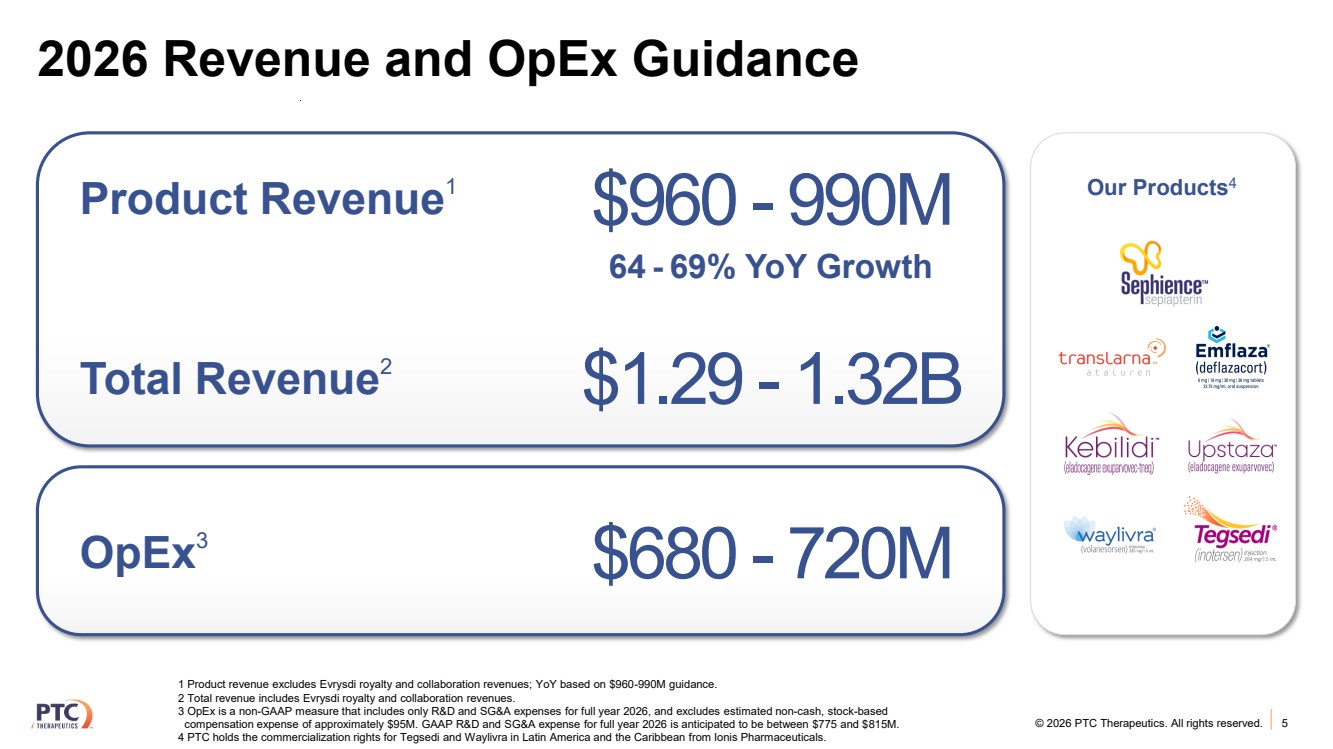
– Full-year 2026 expected total revenue increased to $1.29 to $1.32 billion, with full-year product revenue guidance raised to $960 to $990 million –
– Sephience™ (sepiapterin) Q3 2026 revenue of $182 million, with continued growth in the US and ongoing global expansion –
– Acquired ST-920 Fabry disease gene therapy; BLA submission expected to be completed in Q4 2026 –
WARREN, N.J., October 29, 2026 – PTC Therapeutics, Inc., (NASDAQ: PTCT) today announced a corporate update and financial results for the third quarter ended September 30, 2026.
"We delivered another strong quarter of record product revenue led by the continued momentum of the Sephience launch, putting us firmly on track to achieve our cash flow breakeven milestone this year," said Matthew B. Klein, M.D., Chief Executive Officer. "Now at the one-year mark, the launch has been a success by all measures. With a strong patient base, the large global market, and the reports of meaningful treatment benefits, we look forward to continued growth both in the US and internationally.”
Key Corporate Updates
· | Q3 2026 total revenue of $358 million, including $276 million of product revenue |
· | Sephience launch momentum continues with steady growth in the US and ongoing global expansion |
o | Q3 2026 revenue of $182 million, including $145 million revenue in the US and $37 million revenue ex-US, up over 20% from Q2 2026 |
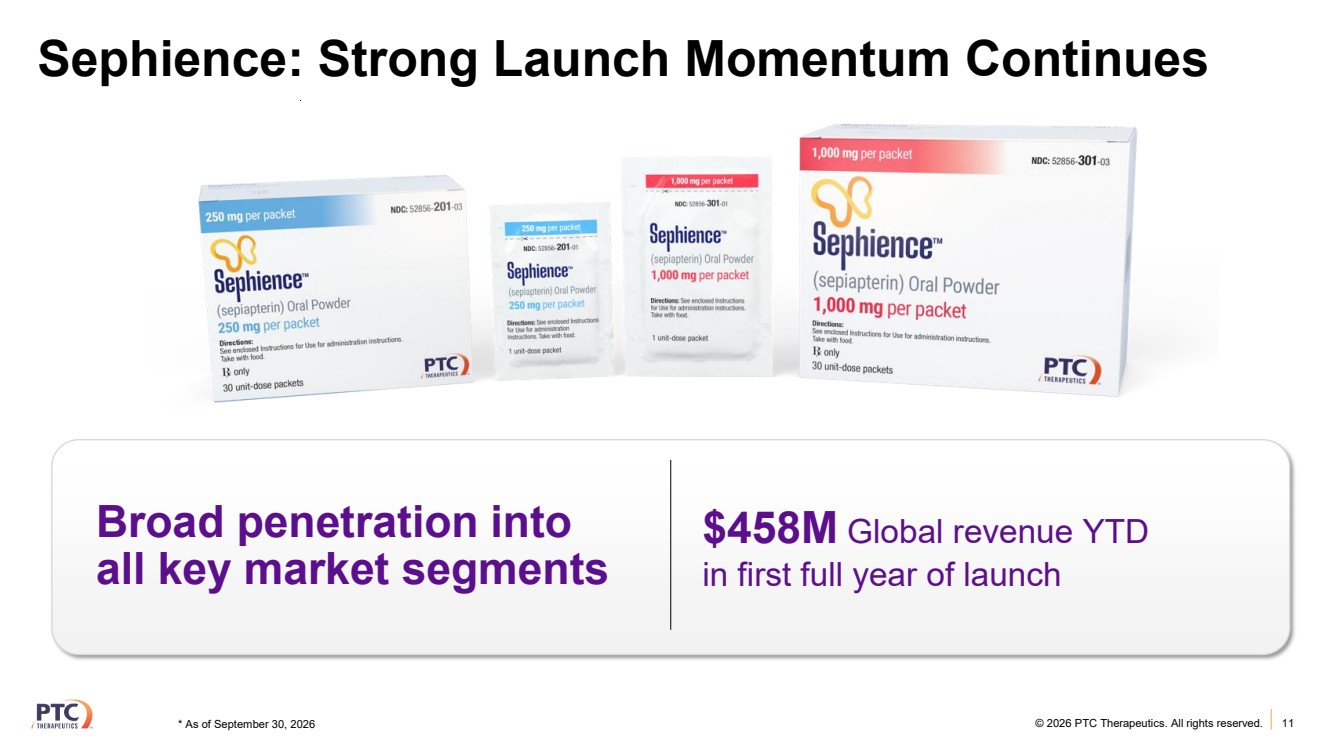
o | Over 2,000 active patients worldwide as of September 30, 2026 |
· | ST-920 Fabry disease BLA submission expected to be completed in Q4 2026 |
o | ST-920 is a one-time administered AAV gene therapy with the potential to reduce the burden associated with chronic enzyme replacement therapy |
o | Potential FDA accelerated approval and commercial launch in 2027 |
· | Votoplam Huntington’s disease program continues to advance |
o | Due to FDA scheduling, Type C meeting to discuss votoplam Phase 2 data and potential accelerated approval path now scheduled for Q1 2027 |
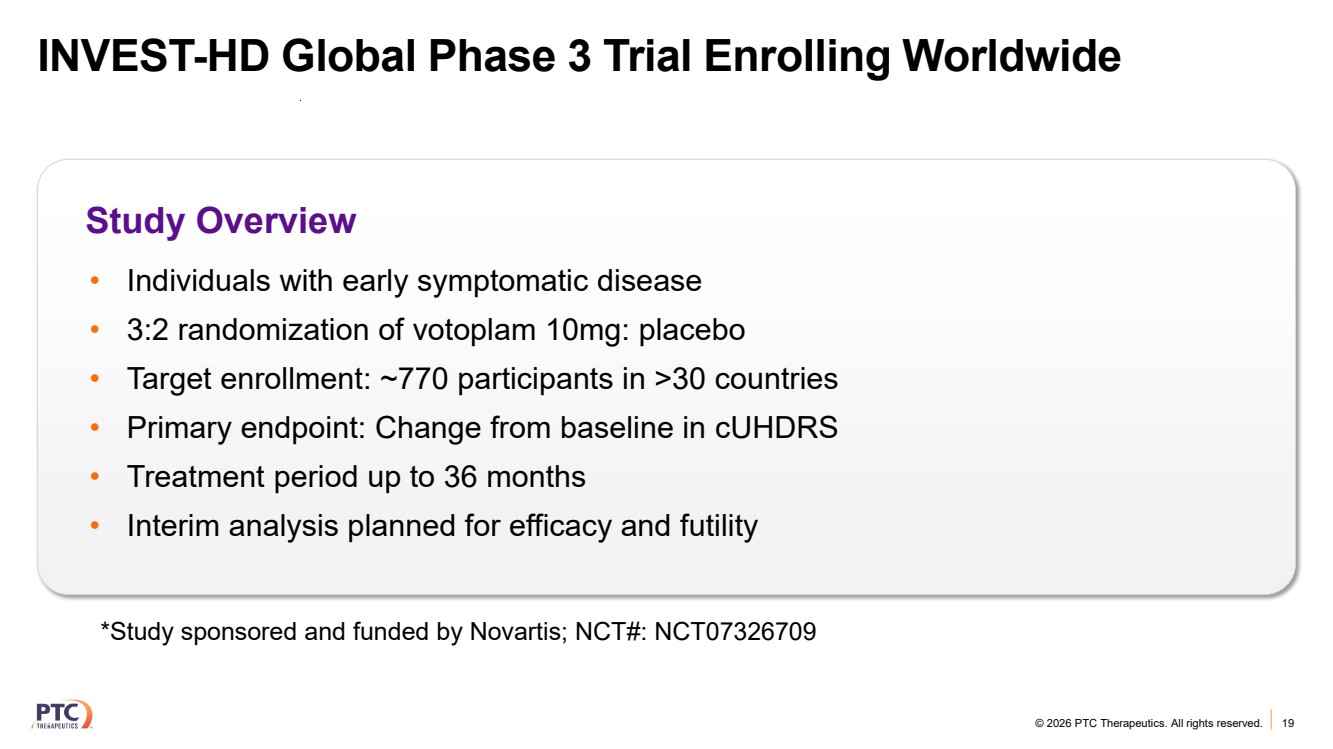
o | Global Phase 3 INVEST-HD study actively enrolling at sites worldwide with target enrollment of approximately 770 early symptomatic patients |
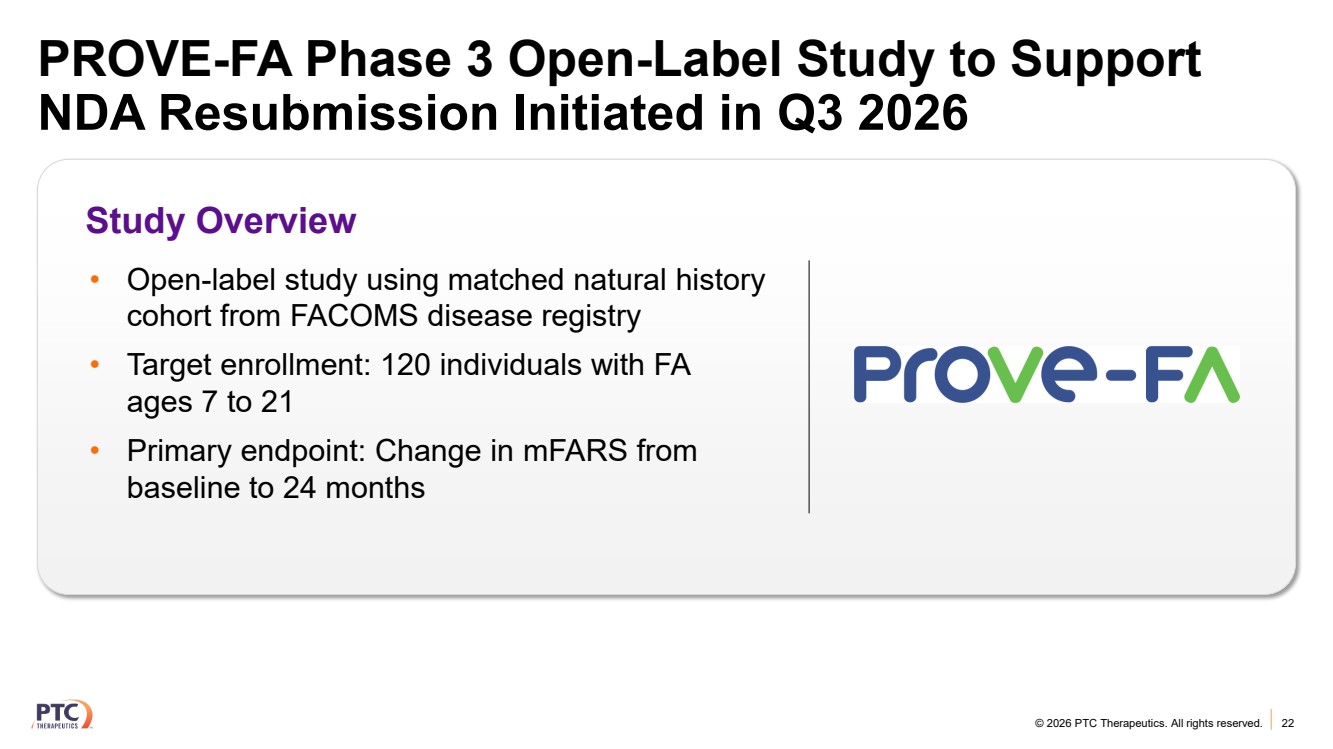
· | Vatiquinone PROVE-FA study to support NDA resubmission for treatment of Friedreich’s ataxia initiated in Q3 2026 |
o | Global study will enroll approximately 120 patients ages 7 to 21 |
o | Study includes open-label treatment arm with matched natural history control arm |
· | PTC pipeline advances across multiple programs |
o | Initiated Phase 2a study of PTC844, a next-generation DHODH inhibitor |
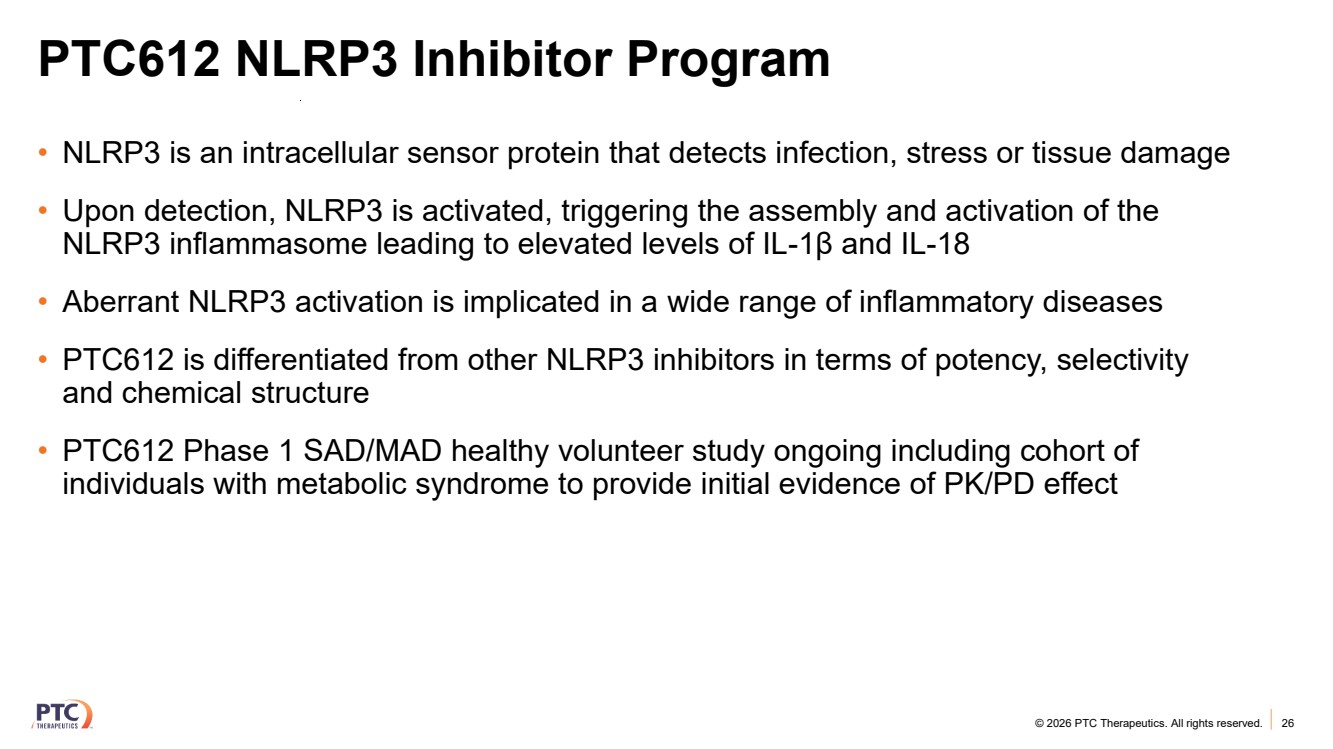
o | Ongoing Phase 1 study of PTC612, an oral NLRP3 inhibitor, continues to advance |
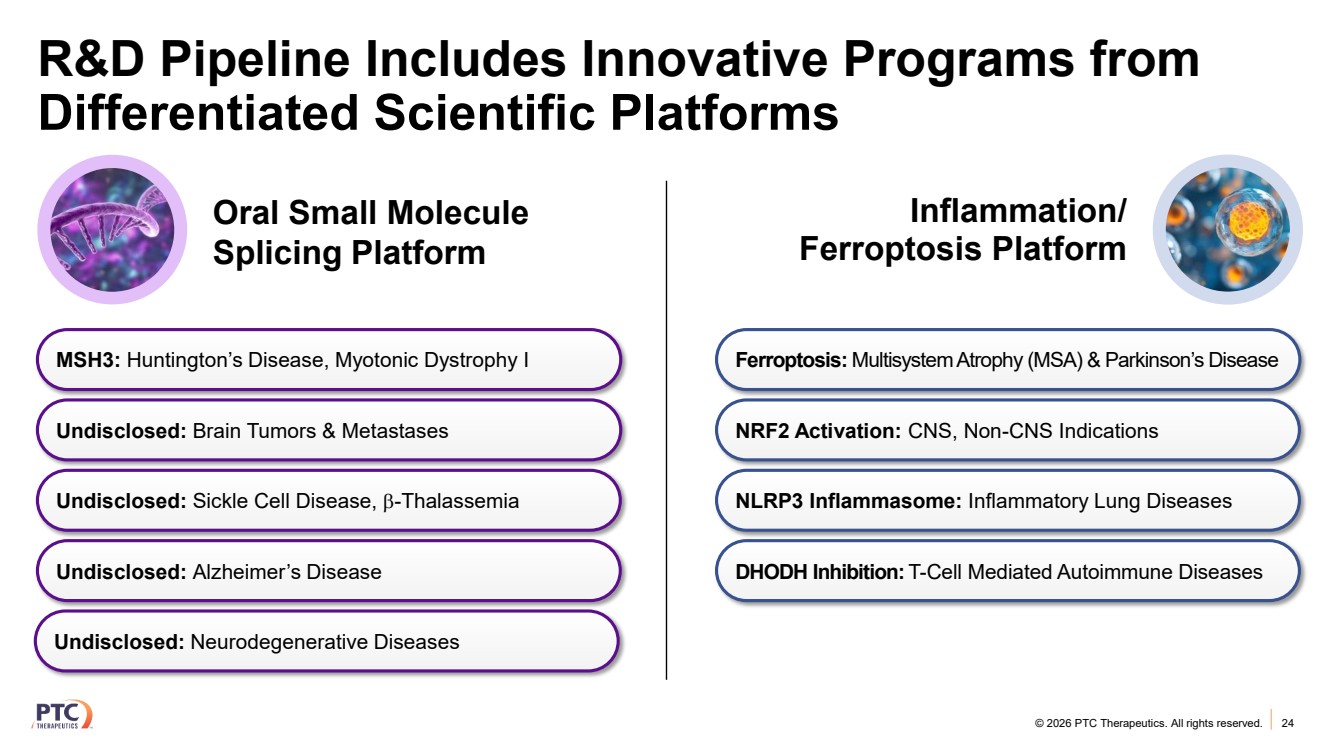
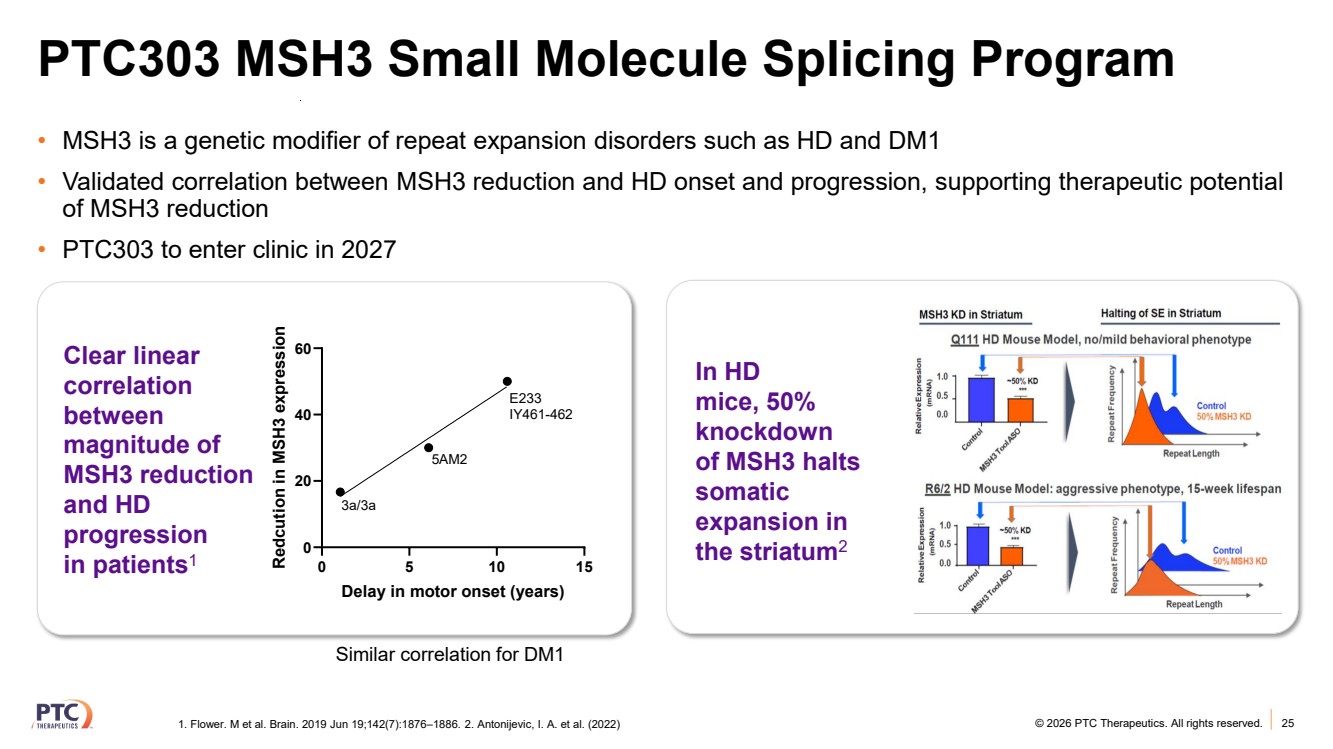
o | PTC303, a splicing development candidate targeting MSH3, expected to enter clinic in 2027 |
Third Quarter 2026 Financial Highlights
· | Total net product revenue and royalty revenue was $357.6 million for the third quarter of 2026, compared to $201.7 million for the third quarter of 2025. |
· | Total net product revenue across the commercial portfolio was $275.9 million for the third quarter of 2026, compared to $131.0 million for the third quarter of 2025, representing an over 100% increase. |
· | Sephience net product revenues were $181.9 million for the third quarter of 2026, representing 20% growth compared to the second quarter of 2026. |
· | Translarna™ (ataluren) net product revenues were $48.5 million for the third quarter of 2026, compared to $50.7 million for the third quarter of 2025. Translarna third quarter 2026 revenue includes a government purchase order from Russia. |
· | Emflaza® (deflazacort) net product revenues were $25.1 million for the third quarter of 2026, compared to $35.2 million for the third quarter of 2025. |
· | Roche reported Evrysdi® (risdiplam) year-to-date sales of approximately CHF 1,470 million, resulting in royalty revenue of $81.7 million to PTC for the third quarter of 2026, compared to $70.8 million to PTC for the third quarter of 2025. |
· | Based on US GAAP (Generally Accepted Accounting Principles), GAAP R&D expenses were $105.4 million for the third quarter of 2026, compared to $100.2 million for the third quarter of 2025. |
· | Non-GAAP R&D expenses were $94.9 million for the third quarter of 2026, excluding $10.5 million in non-cash, stock-based compensation expense, compared to $91.0 million for the third quarter of 2025, excluding $9.1 million in non-cash, stock-based compensation expense. |
· | GAAP SG&A expenses were $80.1 million for the third quarter of 2026, compared to $84.0 million for the third quarter of 2025. |
· | Non-GAAP SG&A expenses were $66.7 million for the third quarter of 2026, excluding $13.3 million in non-cash, stock-based compensation expense, compared to $73.8 million for the third quarter of 2025, excluding $10.3 million in non-cash, stock-based compensation expense. |
· | Net loss was $51.7 million for the third quarter of 2026, compared to net income of $15.9 million for the third quarter of 2025. |
· | In Q3 2026, the Company acquired the ST-920 gene therapy for Fabry disease for $111.0 million upfront, with up to an additional $100.0 million in contingent milestone payments based on US regulatory approvals. Acquired in-process research and development expense was $111.0 million for the third quarter of 2026 and related to the purchase of the ST-920 program. |
· | Cash, cash equivalents, and marketable securities were $2,127.9 million on September 30, 2026, compared to $1,945.4 million on December 31, 2025. |
· | Shares issued and outstanding as of September 30, 2026, were 83,535,767. |
PTC Updates Full-Year 2026 Financial Guidance
· | Expected total revenue increased to $1.29 to $1.32 billion, with total product revenue guidance raised to $960 to $990 million from $850 to $950 million |
· | GAAP R&D and SG&A expense guidance remains $775 to $815 million |
· | Non-GAAP R&D and SG&A expense guidance remains $680 to $720 million, excluding estimated non-cash, stock-based compensation expense of $95 million |
Non-GAAP Financial Measures
In this press release, the financial results of PTC are provided in accordance with GAAP and using certain non-GAAP financial measures. In particular, the non-GAAP R&D and SG&A expense financial measures exclude non-cash, stock-based compensation expense. These non-GAAP financial measures are provided as a complement to financial measures reported in accordance with GAAP because management uses these non-GAAP financial measures when assessing and identifying operational trends. In management's opinion, these non-GAAP financial measures are useful to investors and other users of PTC's financial statements by providing greater transparency into the historical and projected operating performance of PTC and the company's future outlook. Non-GAAP financial measures are not an alternative for financial measures prepared in accordance with GAAP. Quantitative reconciliations of the non-GAAP financial measures to their respective closest equivalent GAAP financial measures are included in the table below.
PTC Therapeutics, Inc.
Consolidated Statements of Operations
(in thousands, except share and per share data)
| | Three Months Ended September | | Nine Months Ended | | ||||||||
| | 2026 | | 2025 | | 2026 | | 2025 | | ||||
Revenues: | | | | | | | | | | | | |
|
Net product revenue | | $ | 275,894 | | $ | 130,956 | | $ | 740,286 | | $ | 402,711 | |
Collaboration and license revenue | | | 229 | | | 9,258 | | | 50,967 | | | 998,430 | |
Royalty revenue | | | 81,684 | | | 70,793 | | | 199,624 | | | 164,837 | |
Total revenues | | | 357,807 | | | 211,007 | | | 990,877 | | | 1,565,978 | |
Operating expenses: | | | | | | | | | | | | | |
Cost of product, collaboration and license sales, excluding amortization of acquired intangible assets | | | 23,664 | | | 15,781 | | | 71,613 | | | 40,063 | |
Amortization of acquired intangible assets | | | 12,595 | | | 7,534 | | | 36,017 | | | 15,393 | |
Research and development (1) | | | 105,353 | | | 100,158 | | | 305,376 | | | 322,121 | |
Selling, general and administrative (2) | | | 80,081 | | | 84,046 | | | 246,894 | | | 250,269 | |
Change in the fair value of contingent consideration | | | — | | | — | | | — | | | (800) | |
Tangible asset impairment and losses on transactions, net | | | — | | | 472 | | | 927 | | | 648 | |
Acquired in-process research and development * | | | 111,000 | | | — | | | 111,000 | | | — | |
Total operating expenses | | | 332,693 | | | 207,991 | | | 771,827 | | | 627,694 | |
Income from operations | | | 25,114 | | | 3,016 | | | 219,050 | | | 938,284 | |
Interest expense, net | | | (45,866) | | | (32,592) | | | (143,377) | | | (97,042) | |
Other (expense) income, net | | | (1,073) | | | 6,502 | | | (2,415) | | | (5,540) | |
Loss on extinguishment of debt | | | (19,263) | | | — | | | (19,263) | | | — | |
(Loss) income before income tax (expense) benefit | | | (41,088) | | | (23,074) | | | 53,995 | | | 835,702 | |
Income tax (expense) benefit | | | (10,605) | | | 38,970 | | | (25,001) | | | (18,093) | |
Net (loss) income attributable to common stockholders | | $ | (51,693) | | $ | 15,896 | | $ | 28,994 | | $ | 817,609 | |
| | | | | | | | | | | | | |
Weighted-average shares outstanding: | | | | | | | | | | | | | |
Basic (in shares) | | | 83,476,100 | | | 78,471,119 | | | 83,004,625 | | | 78,642,478 | |
Diluted (in shares) | | | 83,476,100 | | | 87,115,369 | | | 92,253,675 | | | 86,899,727 | |
Net (loss) income per share—basic (in dollars per share) | | $ | (0.62) | | $ | 0.20 | | $ | 0.35 | | $ | 10.40 | |
Net (loss) income per share—diluted (in dollars per share) | | $ | (0.62) | | $ | 0.20 | | $ | 0.34 | | $ | 9.45 | |
| | | | | | | | | | | | | |
(1) Research and development reconciliation | | | | | | | | | | | | | |
GAAP research and development | | $ | 105,353 | | $ | 100,158 | | $ | 305,376 | | $ | 322,121 | |
Less: share-based compensation expense | | | 10,479 | | | 9,133 | | | 32,155 | | | 26,827 | |
Non-GAAP research and development | | $ | 94,874 | | $ | 91,025 | | $ | 273,221 | | $ | 295,294 | |
| | | | | | | | | | | | | |
(2) Selling, general and administrative reconciliation | | | | | | | | | | | | | |
GAAP selling, general and administrative | | $ | 80,081 | | $ | 84,046 | | $ | 246,894 | | $ | 250,269 | |
Less: share-based compensation expense | | | 13,348 | | | 10,293 | | | 38,384 | | | 29,202 | |
Non-GAAP selling, general and administrative | | $ | 66,733 | | $ | 73,753 | | $ | 208,510 | | $ | 221,067 | |
| | | | | | | | | | | | | |
* In Q3 2026, the Company purchased the ST-920 asset from Sangamo Therapeutics, Inc. and paid an upfront cash consideration of $111.0 million which was recorded as Acquired in-process research and development expense.
PTC Therapeutics, Inc.
Summary Consolidated Balance Sheets
(in thousands, except share data)
| | | | |
|
| | September 30, | | December | |
Cash, cash equivalents and marketable securities | | $2,127,918 | | $1,945,371 | |
Total Assets | | $3,207,715 | | $2,898,767 | |
| | | | | |
Total debt | | $536,268 | | $286,631 | |
Total deferred revenue | | 1,975 | | 2,040 | |
Total liability for sale of future royalties | | 2,305,603 | | 2,308,366 | |
Total liabilities | | $3,398,924 | | $3,104,080 | |
| | | | | |
Total stockholders' deficit (83,535,767 and 81,474,366 common shares issued and outstanding at September 30, 2026 and December 31, 2025, respectively) | | $(191,209) | | $(205,313) | |
Total liabilities and stockholders' deficit | | $3,207,715 | | $2,898,767 | |
| | | | |
PTC Therapeutics, Inc.
Reconciliation of GAAP to Non-GAAP Projected Full Year 2026 R&D and SG&A Expense
(in millions)
| | | | | |
|
| | | Low End of Range | | High End of Range | |
Projected GAAP R&D and SG&A Expense | | | 775 | | $815 | |
Less: projected non-cash, stock-based compensation expense | | | 95 | | 95 | |
Projected non-GAAP R&D and SG&A expense | | | $680 | | $720 | |
| | | | | | |
Acronyms
AAV: adeno-associated virus
BLA: Biologics License Application
CHF: Confoederatio Helvetica Francs (Swiss francs)
DHODH: dihydroorotate dehydrogenase
FA: Friedreich’s ataxia
FDA: US Food and Drug Administration
GAAP: Generally Accepted Accounting Principles
HD: Huntington’s disease
MSH3: MutS Homolog 3 (human gene)
NDA: New Drug Application
NLRP3: NOD-, LRR- and pyrin domain-containing 3 (multi-protein complex)
R&D: Research and Development
SG&A: Selling, General, and Administrative
Today's Conference Call and Webcast Reminder
To access the live webcast, please visit the “Events & Presentations” page within the Investors section of the PTC website. A replay of the webcast will be available on the PTC website for 30 days following the event. To participate via phone, please register in advance here to receive dial-in details.
About PTC Therapeutics, Inc.
PTC is a global biopharmaceutical company dedicated to the discovery, development and commercialization of clinically differentiated medicines for children and adults living with rare disorders. PTC is advancing a robust and diversified pipeline of transformative medicines as part of its mission to provide access to best-in-class treatments for patients with unmet medical needs. The company's strategy is to leverage its scientific expertise and global commercial infrastructure to optimize value for patients and other stakeholders. To learn more about PTC, please visit www.ptcbio.com and follow on LinkedIn, X, Facebook and Instagram.
For more information please contact:
Investors:
Ellen Cavaleri
+1 (615) 618-6228
ecavaleri@ptcbio.com
Media:
Jeanine Clemente
+1 (908) 912-9406
jclemente@ptcbio.com
Forward-Looking Statements
This press release contains forward-looking statements within the meaning of The Private Securities Litigation Reform Act of 1995. All statements contained in this release, other than statements of historic fact, are forward-looking statements, including the information provided under the heading “PTC Updates Full-Year 2026 Financial Guidance”, including with respect to (i) 2026 total product revenue guidance and total revenue guidance and (ii) 2026 GAAP and non-GAAP R&D and SG&A expense guidance, and statements regarding: the future expectations, plans and prospects for PTC, including with respect to the expected timing of clinical trials and studies, availability of data, regulatory submissions and responses, meetings with regulatory agencies, commercialization and other matters with respect to its products and product candidates; PTC's strategy, future operations, future financial position, future revenues, projected costs; and the objectives of management. Other forward-looking statements may be identified by the words, "guidance," "plan," "anticipate," "believe," "estimate," "expect," "intend," "may," "target," "potential," "will," "would," "could," "should," "continue," "aim," and similar expressions.
PTC's actual results, performance or achievements could differ materially from those expressed or implied by forward-looking statements it makes as a result of a variety of risks and uncertainties, including those related to: the outcome of pricing, coverage and reimbursement negotiations with third party payors for PTC's
products or product candidates that PTC commercializes or may commercialize in the future; expectations with respect to Sephience, including commercialization and the potential achievement of sales milestones and contingent payments that PTC may be obligated to make; PTC's ability to maintain its marketing authorization of Translarna for the treatment of nmDMD in geographies in which it has been approved and the effect of the European Commission's adoption of the negative opinion from the Committee for Medicinal Products for Human Use (CHMP) on Translarna and the withdrawal of the Translarna NDA in the US on other regulatory bodies; expectations with respect to PTC's license and collaboration agreement with Novartis Pharmaceuticals Corporation for votoplam for the treatment of Huntington's disease including its right to receive development, regulatory and sales milestones, profit sharing and royalty payments from Novartis, the design and expected timing of clinical trials and studies, the availability of data, and regulatory submissions and responses, including potential accelerated approval; expectations with respect to ST-920, including the expected timing of regulatory submissions and potential approvals, and the potential achievement of regulatory milestones and contingent payments PTC may be obligated to make; expectations with respect to Upstaza/Kebilidi, including commercialization, manufacturing capabilities, and the potential achievement of sales milestones and contingent payments that PTC may be obligated to make; expectations with respect to vatiquinone, including with respect to the design and expected timing of clinical trials and studies, the availability of data, and regulatory submissions and responses and potential approvals and other matters; expectations with respect to the commercialization of Evrysdi under PTC's SMA collaboration; expectations with respect to the commercialization of Tegsedi and Waylivra; expectations regarding PTC's product candidates, including the timing of clinical trials and studies; significant business effects, including the effects of industry, market, economic, political or regulatory conditions; changes in tax and other laws, regulations, rates and policies; the eligible patient base and commercial potential of PTC's products and product candidates; PTC's scientific approach and general development progress; PTC's ability to satisfy its obligations under the terms of its lease agreements; the sufficiency of PTC's cash resources and its ability to obtain adequate financing in the future for its foreseeable and unforeseeable operating expenses and capital expenditures; and the factors discussed in the "Risk Factors" section of PTC's Annual Report on Form 10-K, as well as any updates to these risk factors filed from time to time in PTC's other filings with the SEC. You are urged to carefully consider all such factors.
As with any pharmaceutical under development, there are significant risks in the development, regulatory approval and commercialization of new products. There are no guarantees that any product will receive or maintain regulatory approval in any territory, or prove to be commercially successful, including Sephience, Translarna, Emflaza, Upstaza, Kebilidi, Evrysdi, Tegsedi or Waylivra.
The forward-looking statements contained herein represent PTC's views only as of the date of this press release and PTC does not undertake or plan to update or revise any such forward-looking statements to reflect actual results or changes in plans, prospects, assumptions, estimates or projections, or other circumstances occurring after the date of this press release except as required by law.
Exhibit 99.2
| © 2026 PTC Therapeutics. All rights reserved. PTC Therapeutics October 2026 |
| © 2026 PTC Therapeutics. All rights reserved. This presentation contains forward-looking statements within the meaning of The Private Securities Litigation Reform Act of 1995. All statements contained in this presentation, other than statements of historic fact, are forward-looking statements, including with respect to 2026 total product revenue guidance and total revenue guidance and 2026 operating expense guidance, and statements regarding: the future expectations, plans and prospects for PTC, including with respect to the expected timing of clinical trials and studies, availability of data, regulatory submissions and responses, meetings with regulatory agencies, commercialization and other matters with respect to its products and product candidates; PTC's strategy, future operations, future financial position, future revenues, projected costs; and the objectives of management. Other forward-looking statements may be identified by the words, "guidance," "plan," "anticipate," "believe," "estimate," "expect," "intend," "may," "target," "potential," "will," "would," "could," "should," "continue," "aim," and similar expressions. PTC's actual results, performance or achievements could differ materially from those expressed or implied by forward-looking statements it makes as a result of a variety of risks and uncertainties, including those related to: the outcome of pricing, coverage and reimbursement negotiations with third party payors for PTC's products or product candidates that PTC commercializes or may commercialize in the future; expectations with respect to Sephience, including commercialization and the potential achievement of sales milestones and contingent payments that PTC may be obligated to make; PTC's ability to maintain its marketing authorization of Translarna for the treatment of nmDMD in geographies in which it has been approved and the effect of the European Commission's adoption of the negative opinion from the Committee for Medicinal Products for Human Use (CHMP) on Translarna and the withdrawal of the Translarna NDA in the US on other regulatory bodies; expectations with respect to PTC's license and collaboration agreement with Novartis Pharmaceuticals Corporation for votoplam for the treatment of Huntington's disease including its right to receive development, regulatory and sales milestones, profit sharing and royalty payments from Novartis, the design and expected timing of clinical trials and studies, the availability of data, and regulatory submissions and responses, including potential accelerated approval; expectations with respect to ST-920, including the expected timing of regulatory submissions and potential approvals, and the potential achievement of regulatory milestones and contingent payments PTC may be obligated to make; expectations with respect to Upstaza/Kebilidi, including commercialization, manufacturing capabilities, and the potential achievement of sales milestones and contingent payments that PTC may be obligated to make; expectations with respect to vatiquinone, including with respect to the design and expected timing of clinical trials and studies, the availability of data, and regulatory submissions and responses and potential approvals and other matters; expectations with respect to the commercialization of Evrysdi under PTC's SMA collaboration; expectations with respect to the commercialization of Tegsedi and Waylivra; expectations regarding PTC's product candidates, including the timing of clinical trials and studies; significant business effects, including the effects of industry, market, economic, political or regulatory conditions; changes in tax and other laws, regulations, rates and policies; the eligible patient base and commercial potential of PTC's products and product candidates; PTC's scientific approach and general development progress; PTC's ability to satisfy its obligations under the terms of its lease agreements; the sufficiency of PTC's cash resources and its ability to obtain adequate financing in the future for its foreseeable and unforeseeable operating expenses and capital expenditures; and the factors discussed in the "Risk Factors" section of PTC's Annual Report on Form 10-K, as well as any updates to these risk factors filed from time to time in PTC's other filings with the SEC. You are urged to carefully consider all such factors. As with any pharmaceutical under development, there are significant risks in the development, regulatory approval and commercialization of new products. There are no guarantees that any product will receive or maintain regulatory approval in any territory, or prove to be commercially successful, including Sephience, Translarna, Emflaza, Upstaza, Kebilidi, Evrysdi, Tegsedi or Waylivra. The forward-looking statements contained herein represent PTC's views only as of the date of this presentation and PTC does not undertake or plan to update or revise any such forward-looking statements to reflect actual results or changes in plans, prospects, assumptions, estimates or projections, or other circumstances occurring after the date of this presentation except as required by law. Forward Looking Statements 2 |
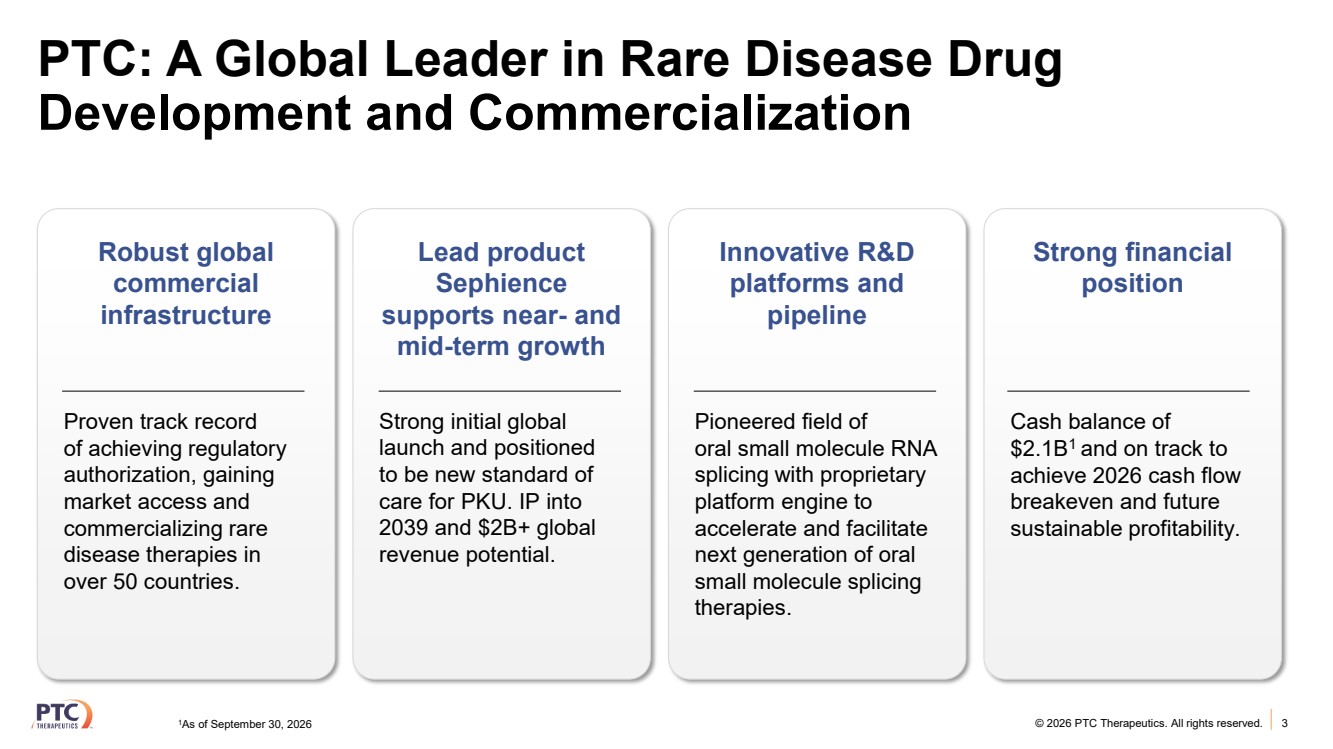
| © 2026 PTC Therapeutics. All rights reserved. PTC: A Global Leader in Rare Disease Drug Development and Commercialization 1As of September 30, 2026 3 Robust global commercial infrastructure Proven track record of achieving regulatory authorization, gaining market access and commercializing rare disease therapies in over 50 countries. Lead product Sephience supports near- and mid-term growth Strong initial global launch and positioned to be new standard of care for PKU. IP into 2039 and $2B+ global revenue potential. Innovative R&D platforms and pipeline Pioneered field of oral small molecule RNA splicing with proprietary platform engine to accelerate and facilitate next generation of oral small molecule splicing therapies. Strong financial position Cash balance of $2.1B1 and on track to achieve 2026 cash flow breakeven and future sustainable profitability. |
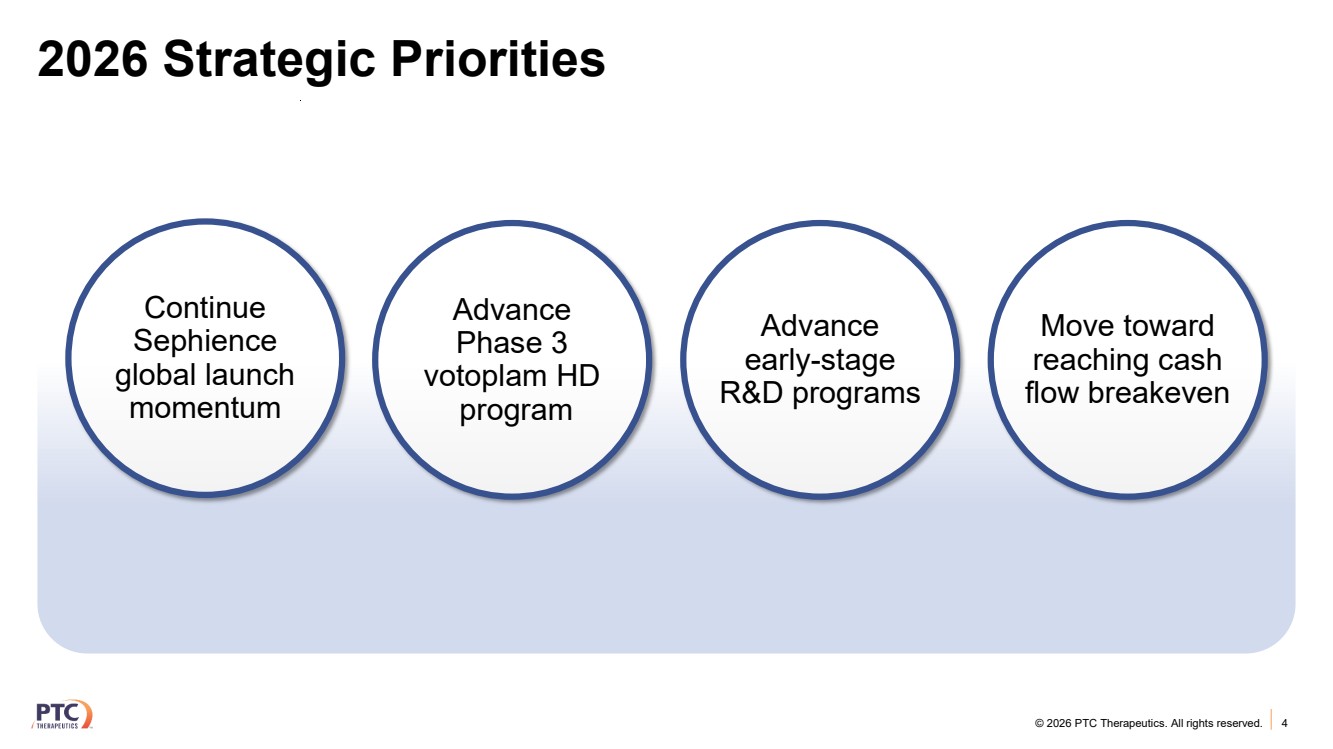
| © 2026 PTC Therapeutics. All rights reserved. 2026 Strategic Priorities 4 Continue Sephience global launch momentum Move toward reaching cash flow breakeven Advance Phase 3 votoplam HD program Advance early-stage R&D programs |
| © 2026 PTC Therapeutics. All rights reserved. 2026 Revenue and OpEx Guidance 5 Product Revenue1 OpEx $680 - 720M 3 $1.29 - 1.32B $960 - 990M 64 - 69% YoY Growth Total Revenue2 Our Products4 1 Product revenue excludes Evrysdi royalty and collaboration revenues; YoY based on $960-990M guidance. 2 Total revenue includes Evrysdi royalty and collaboration revenues. 3 OpEx is a non-GAAP measure that includes only R&D and SG&A expenses for full year 2026, and excludes estimated non-cash, stock-based compensation expense of approximately $95M. GAAP R&D and SG&A expense for full year 2026 is anticipated to be between $775 and $815M. 4 PTC holds the commercialization rights for Tegsedi and Waylivra in Latin America and the Caribbean from Ionis Pharmaceuticals. |
| Katie, living with PKU © 2026 PTC Therapeutics. All rights reserved. Sephience PKU Program 6 |
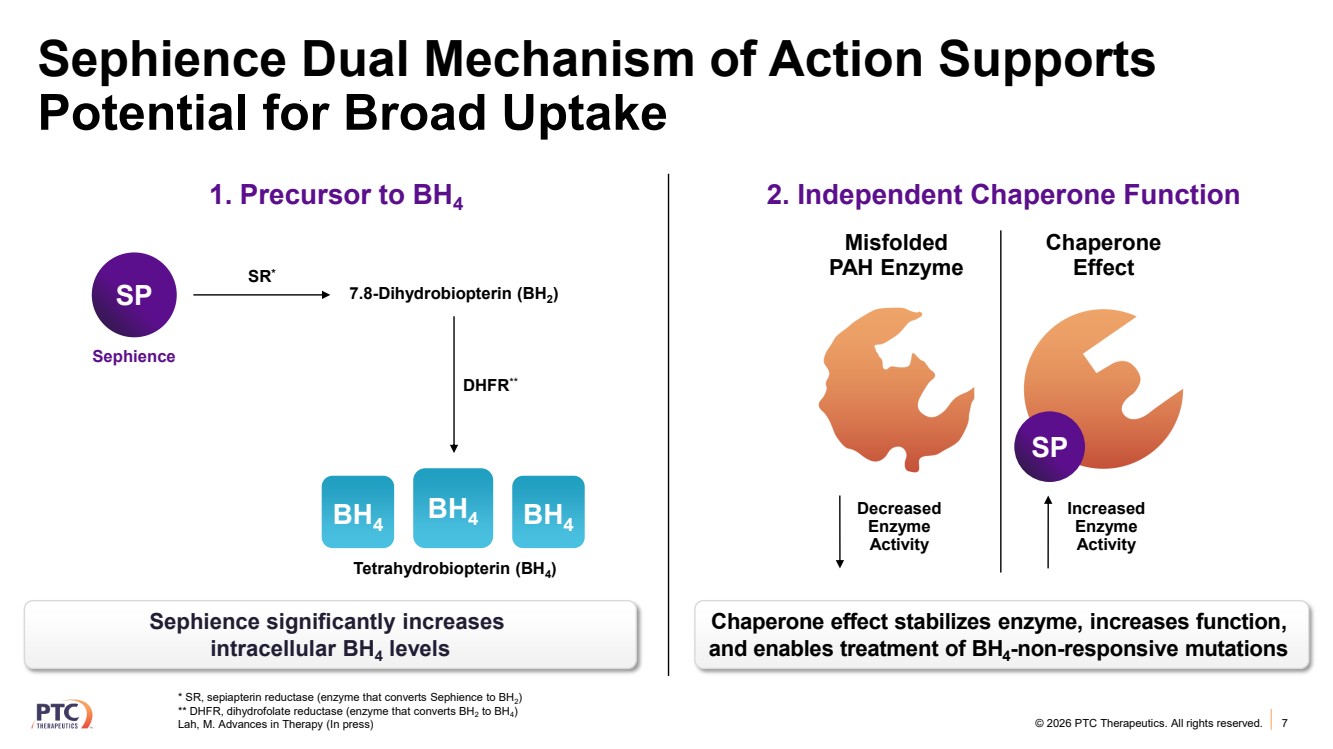
| © 2026 PTC Therapeutics. All rights reserved. Sephience Dual Mechanism of Action Supports Potential for Broad Uptake 7 1. Precursor to BH4 SP Sephience 7.8-Dihydrobiopterin (BH2 ) Tetrahydrobiopterin (BH4 ) SR* DHFR** BH BH4 4 BH4 Sephience significantly increases intracellular BH4 levels 2. Independent Chaperone Function Misfolded PAH Enzyme Chaperone Effect Decreased Enzyme Activity Increased Enzyme Activity SP Chaperone effect stabilizes enzyme, increases function, and enables treatment of BH4 -non-responsive mutations * SR, sepiapterin reductase (enzyme that converts Sephience to BH2 ) ** DHFR, dihydrofolate reductase (enzyme that converts BH2 to BH4 ) Lah, M. Advances in Therapy (In press) |
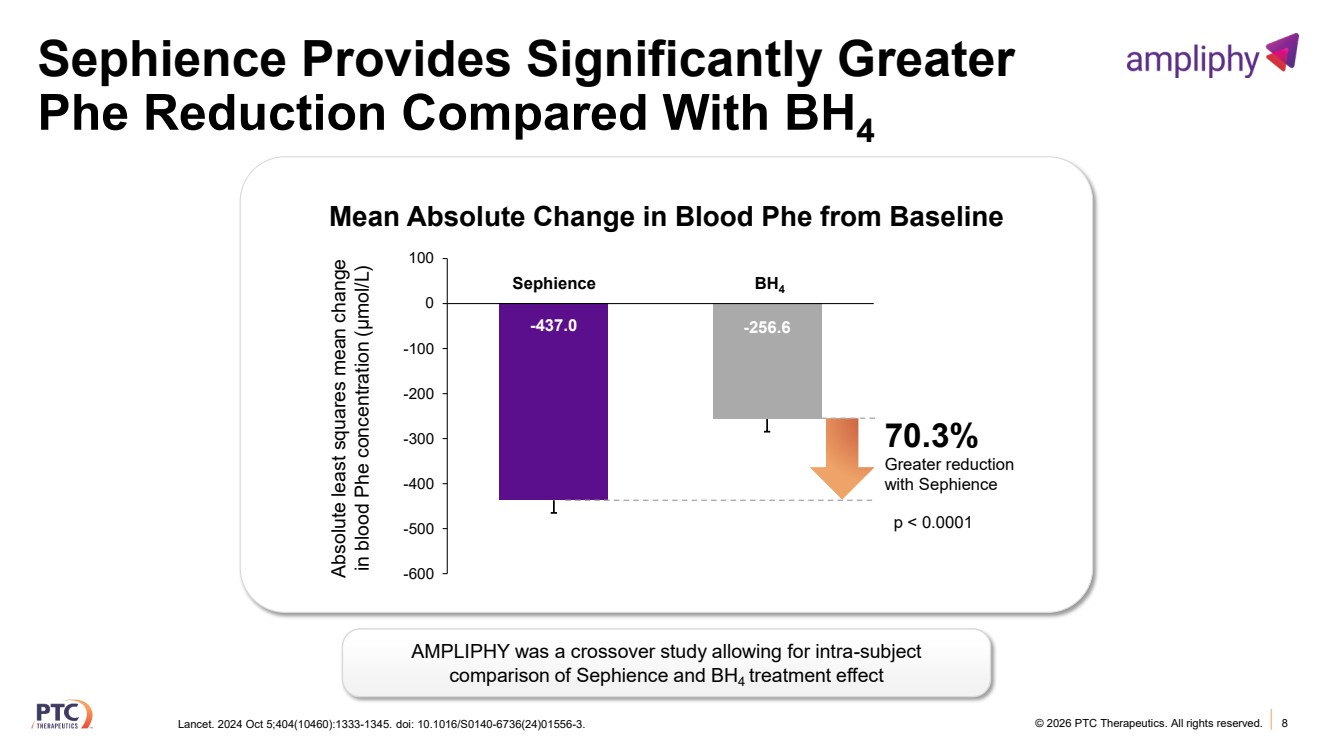
| © 2026 PTC Therapeutics. All rights reserved. Sephience Provides Significantly Greater Phe Reduction Compared With BH4 8 -437.0 -256.6 -600 -500 -400 -300 -200 -100 0 100 Absolute least squares mean change in blood Phe concentration (µmol/L) Sephience BH4 70.3% Greater reduction with Sephience p < 0.0001 Mean Absolute Change in Blood Phe from Baseline AMPLIPHY was a crossover study allowing for intra-subject comparison of Sephience and BH4 treatment effect Lancet. 2024 Oct 5;404(10460):1333-1345. doi: 10.1016/S0140-6736(24)01556-3. |
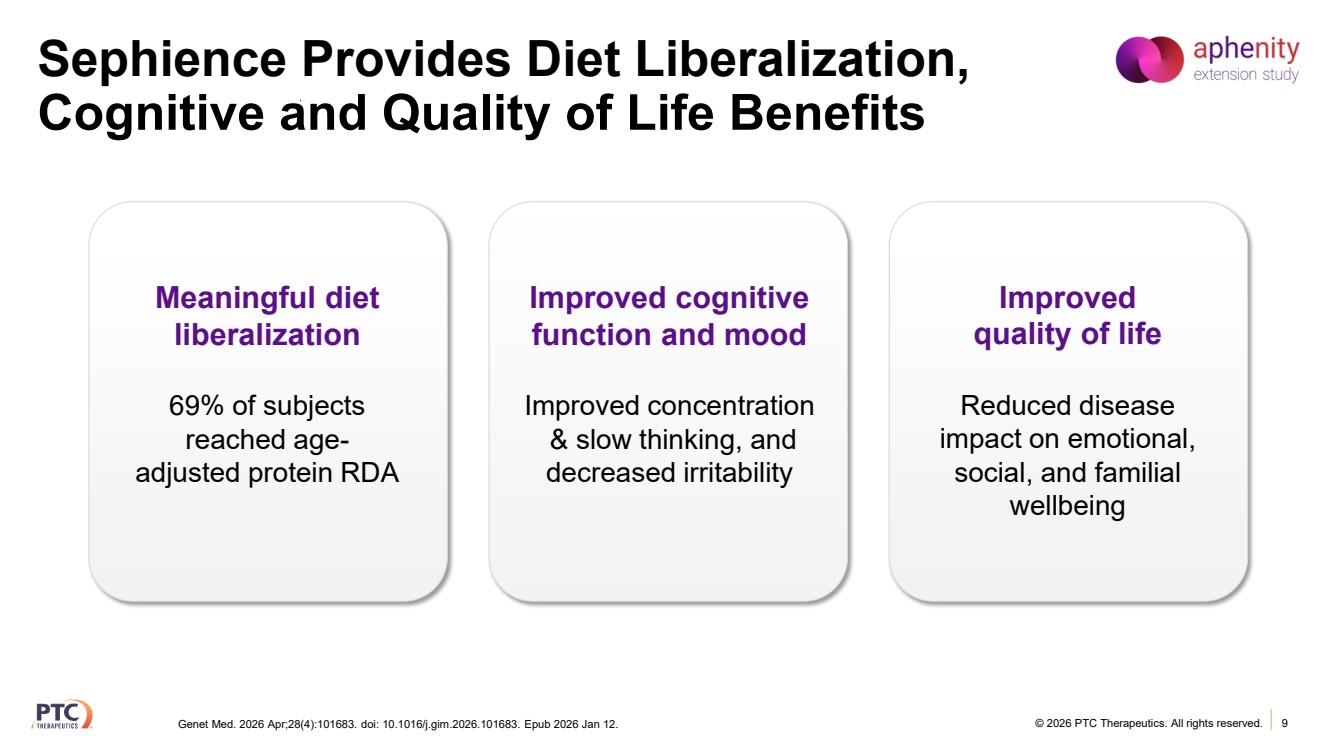
| © 2026 PTC Therapeutics. All rights reserved. Sephience Provides Diet Liberalization, Cognitive and Quality of Life Benefits 9 Improved cognitive function and mood Improved concentration & slow thinking, and decreased irritability Meaningful diet liberalization 69% of subjects reached age-adjusted protein RDA Improved quality of life Reduced disease impact on emotional, social, and familial wellbeing Genet Med. 2026 Apr;28(4):101683. doi: 10.1016/j.gim.2026.101683. Epub 2026 Jan 12. |
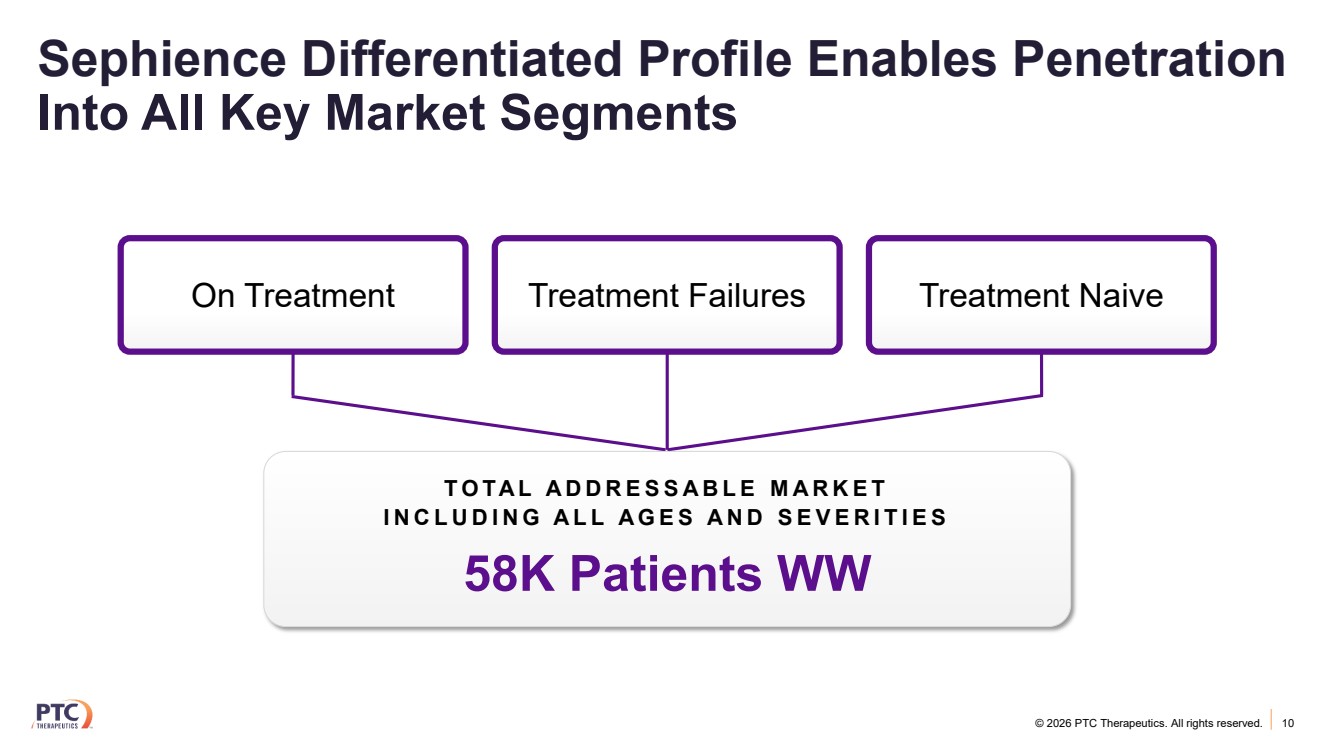
| © 2026 PTC Therapeutics. All rights reserved. Sephience Differentiated Profile Enables Penetration Into All Key Market Segments 10 On Treatment Treatment Failures Treatment Naive 58K Patients WW T O TA L A D D R E S S A B L E M A R K E T I N C L U D I N G A L L A G E S A N D S E V E R I T I E S |
| © 2026 PTC Therapeutics. All rights reserved. Sephience: Strong Launch Momentum Continues * As of September 30, 2026 11 $458M Global revenue YTD in first full year of launch Broad penetration into all key market segments |
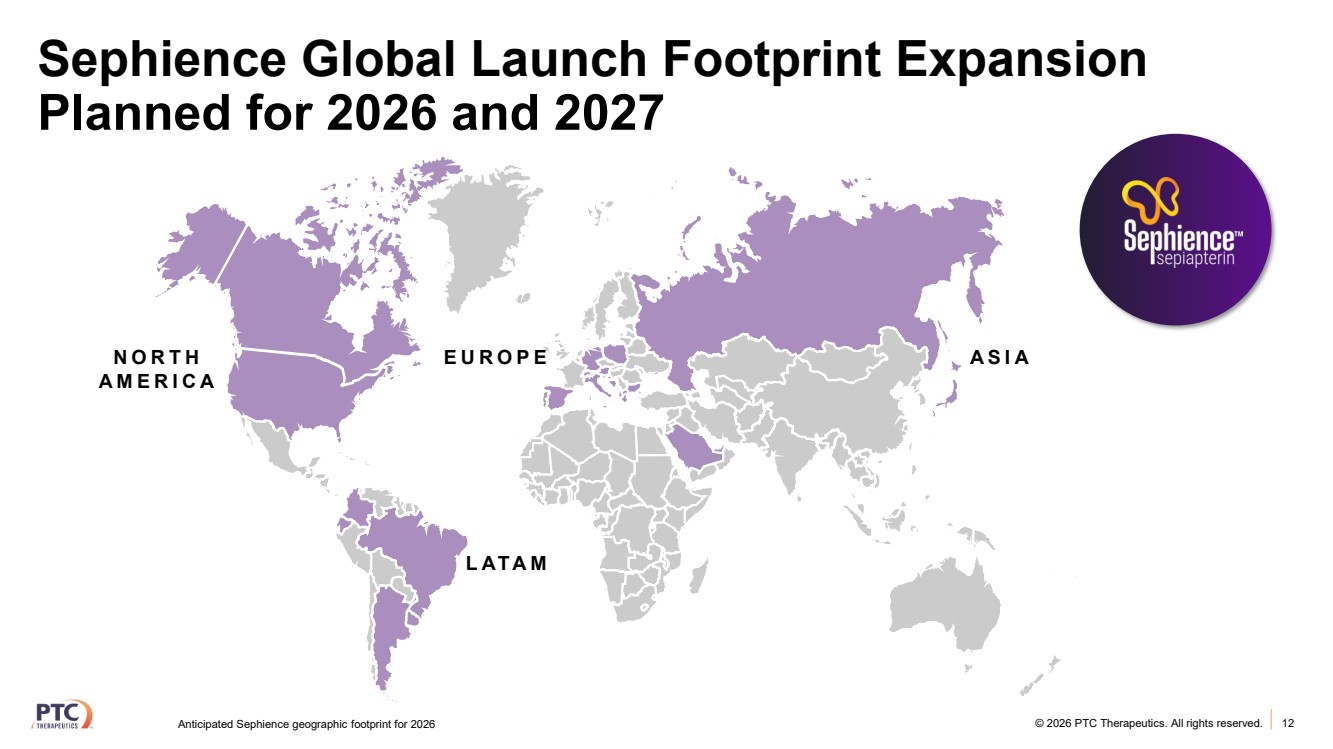
| © 2026 PTC Therapeutics. All rights reserved. Sephience Global Launch Footprint Expansion Planned for 2026 and 2027 12 N O R T H A M E R I C A E U R O P E A S I A L AT A M Anticipated Sephience geographic footprint for 2026 |
| © 2026 PTC Therapeutics. All rights reserved. ST-920 Fabry Disease Program 13 |
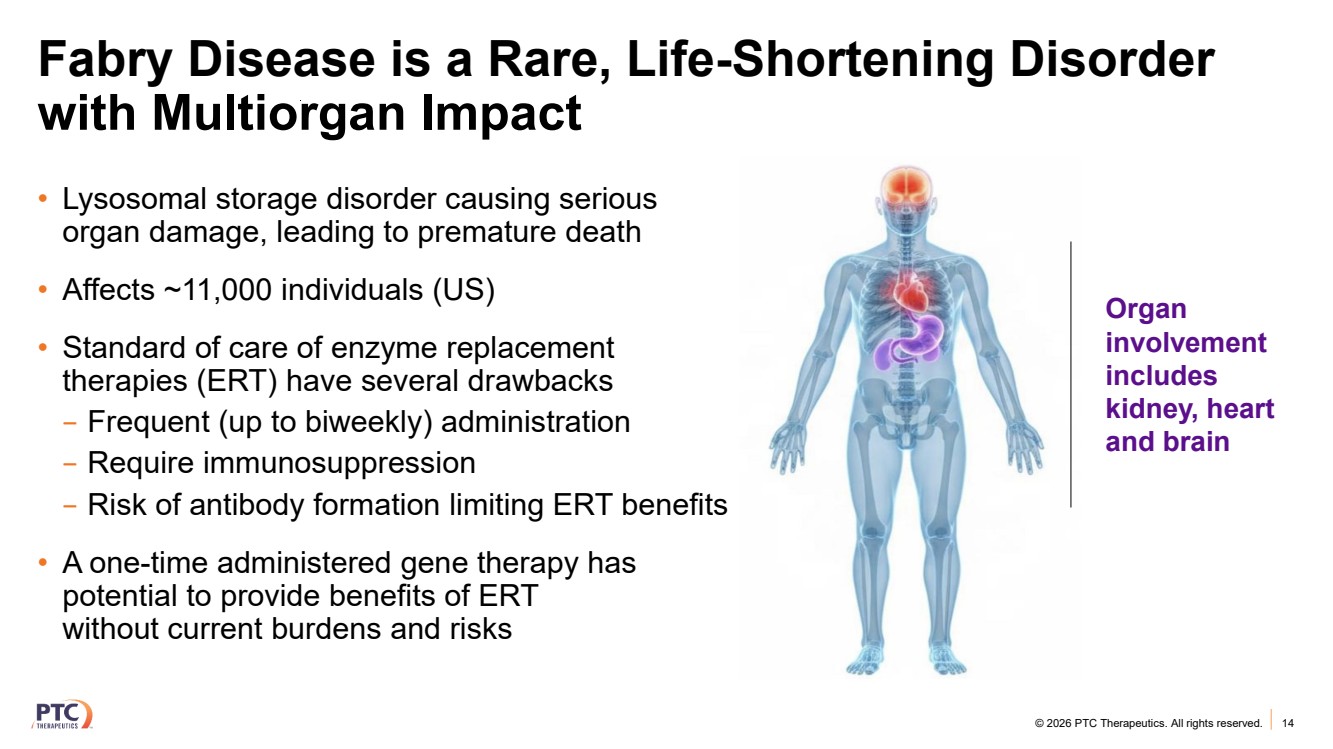
| © 2026 PTC Therapeutics. All rights reserved. • Lysosomal storage disorder causing serious organ damage, leading to premature death • Affects ~11,000 individuals (US) • Standard of care of enzyme replacement therapies (ERT) have several drawbacks − Frequent (up to biweekly) administration − Require immunosuppression − Risk of antibody formation limiting ERT benefits • A one-time administered gene therapy has potential to provide benefits of ERT without current burdens and risks Fabry Disease is a Rare, Life-Shortening Disorder with Multiorgan Impact 14 Organ involvement includes kidney, heart and brain |
| © 2026 PTC Therapeutics. All rights reserved. • AAV gene therapy that provides humanized gene enabling long-term production of the deficient α-Gal A enzyme • Favorable safety profile with no need for immunosuppression • Durable α-Gal A activity with longest follow up of over 5 years • Favorable effects on renal function and other disease aspects following gene therapy administration ST-9201 Provides One-Time Administered Durable Enzyme Production 15 BLA submission for accelerated approval expected to be completed in Q4 2026 1 Isaralgagene civaparvovec |
| April, living with HD © 2026 PTC Therapeutics. All rights reserved. Votoplam Huntington’s Disease Program 16 |

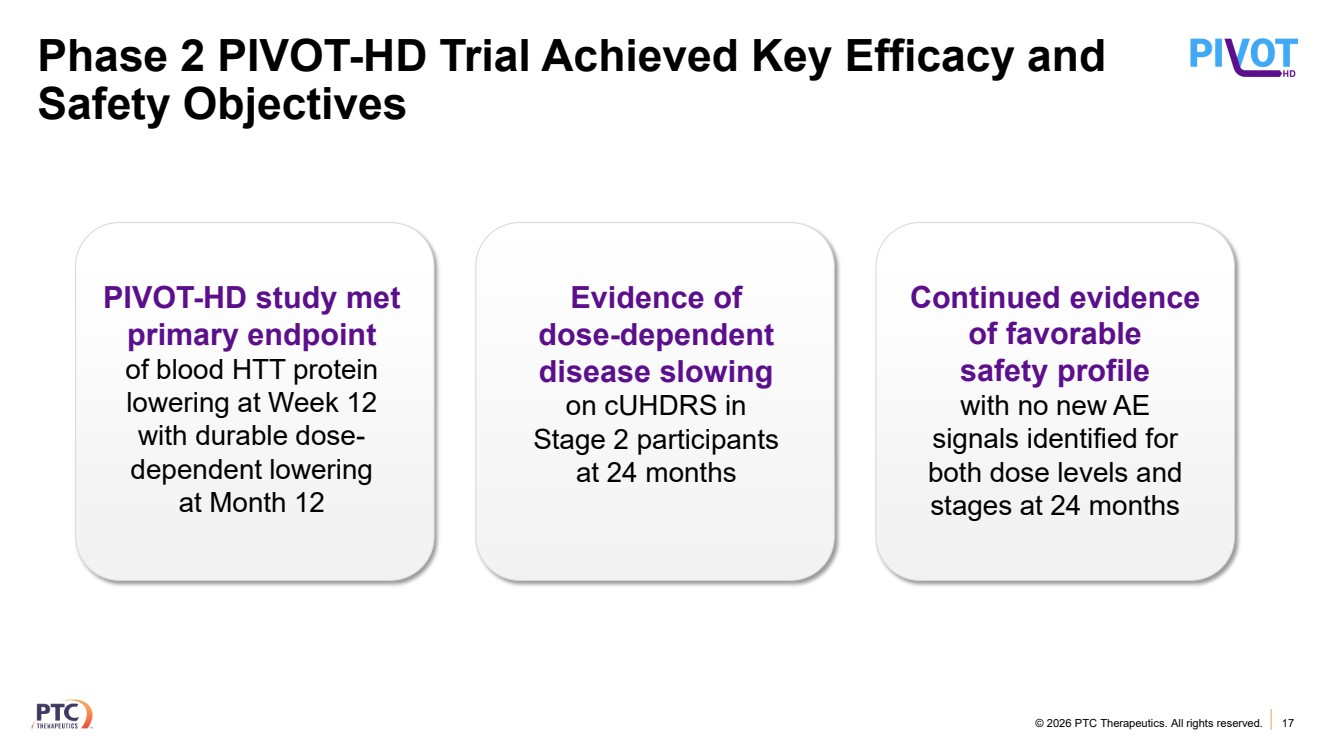
| © 2026 PTC Therapeutics. All rights reserved. Phase 2 PIVOT-HD Trial Achieved Key Efficacy and Safety Objectives 17 17 Evidence of dose-dependent disease slowing on cUHDRS in Stage 2 participants at 24 months PIVOT-HD study met primary endpoint of blood HTT protein lowering at Week 12 with durable dose-dependent lowering at Month 12 Continued evidence of favorable safety profile with no new AE signals identified for both dose levels and stages at 24 months |
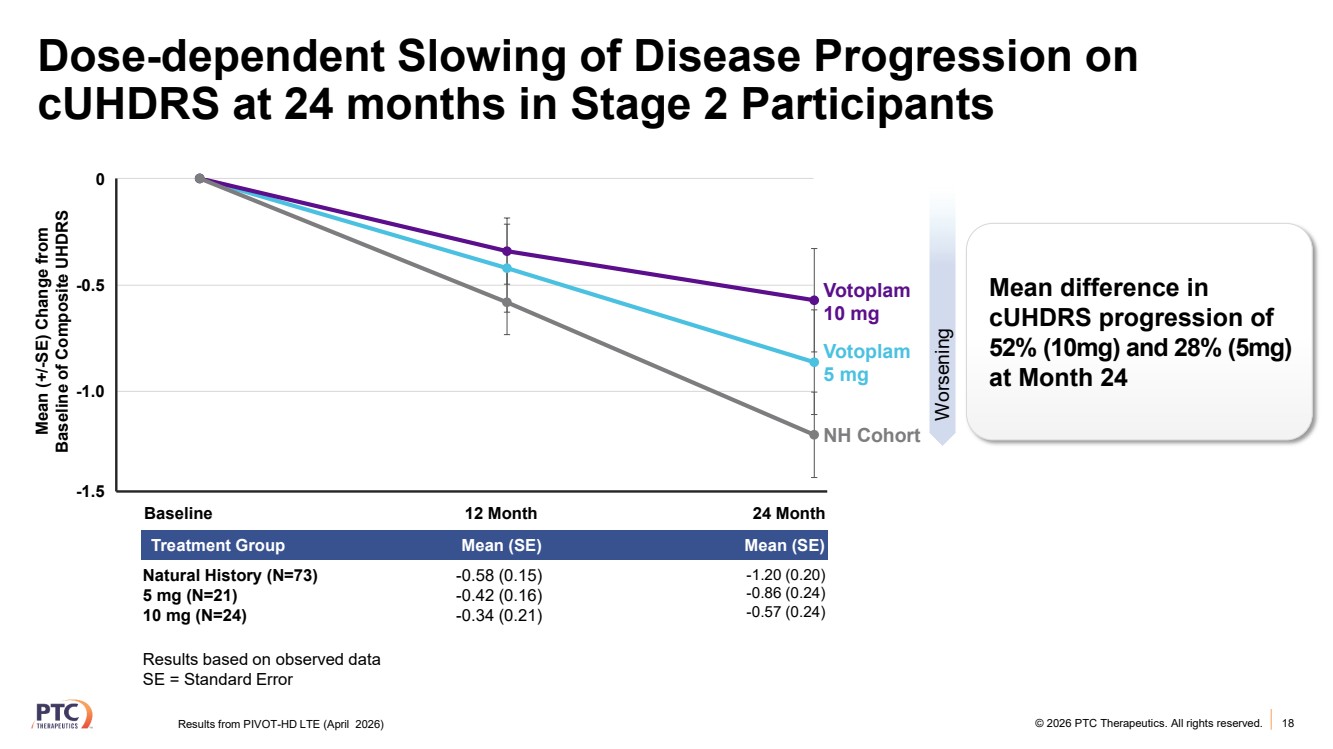
| © 2026 PTC Therapeutics. All rights reserved. Dose-dependent Slowing of Disease Progression on cUHDRS at 24 months in Stage 2 ParticipantsWorsening Results based on observed data SE = Standard Error Baseline 12 Month 24 Month Mean (+/-SE) Change from Baseline of Composite UHDRS 0 -0.5 -1.0 -1.5 NH Cohort Votoplam 5 mg Votoplam 10 mg Mean difference in cUHDRS progression of 52% (10mg) and 28% (5mg) at Month 24 Treatment Group Mean (SE) Mean (SE) -1.20 (0.20) -0.86 (0.24) -0.57 (0.24) -0.58 (0.15) -0.42 (0.16) -0.34 (0.21) Natural History (N=73) 5 mg (N=21) 10 mg (N=24) Results from PIVOT-HD LTE (April 2026) 18 |
| © 2026 PTC Therapeutics. All rights reserved. INVEST-HD Global Phase 3 Trial Enrolling Worldwide 19 19 • Individuals with early symptomatic disease • 3:2 randomization of votoplam 10mg: placebo • Target enrollment: ~770 participants in >30 countries • Primary endpoint: Change from baseline in cUHDRS • Treatment period up to 36 months • Interim analysis planned for efficacy and futility Study Overview *Study sponsored and funded by Novartis; NCT#: NCT07326709 |
| Olivia, living with FA © 2026 PTC Therapeutics. All rights reserved. Vatiquinone Friedreich’s Ataxia Program 20 |

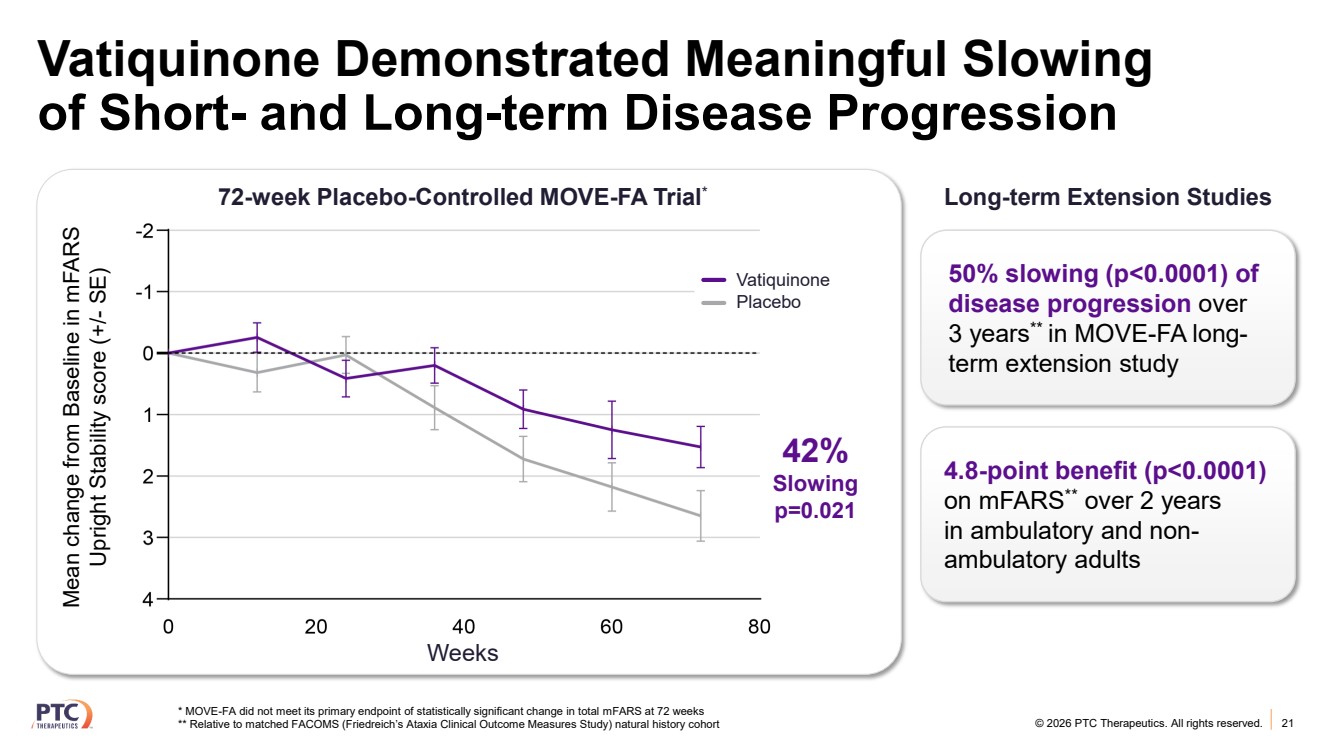
| © 2026 PTC Therapeutics. All rights reserved. Vatiquinone Demonstrated Meaningful Slowing of Short- and Long-term Disease Progression 21 Vatiquinone Placebo Long-term Extension Studies 4.8-point benefit (p<0.0001) on mFARS** over 2 years in ambulatory and non-ambulatory adults 50% slowing (p<0.0001) of disease progression over 3 years** in MOVE-FA long-term extension study 72-week Placebo-Controlled MOVE-FA Trial* Weeks Mean change from Baseline in mFARS Upright Stability score (+/- SE) 42% Slowing p=0.021 * MOVE-FA did not meet its primary endpoint of statistically significant change in total mFARS at 72 weeks ** Relative to matched FACOMS (Friedreich’s Ataxia Clinical Outcome Measures Study) natural history cohort |
| © 2026 PTC Therapeutics. All rights reserved. PROVE-FA Phase 3 Open-Label Study to Support NDA Resubmission Initiated in Q3 2026 22 • Open-label study using matched natural history cohort from FACOMS disease registry • Target enrollment: 120 individuals with FA ages 7 to 21 • Primary endpoint: Change in mFARS from baseline to 24 months Study Overview |
| © 2026 PTC Therapeutics. All rights reserved. Innovative Research Platforms 23 |

| © 2026 PTC Therapeutics. All rights reserved. R&D Pipeline Includes Innovative Programs from Differentiated Scientific Platforms 24 MSH3: Huntington’s Disease, Myotonic Dystrophy I Undisclosed: Alzheimer’s Disease Undisclosed: Brain Tumors & Metastases Undisclosed: Sickle Cell Disease, -Thalassemia Oral Small Molecule Splicing Platform Inflammation/ Ferroptosis Platform Ferroptosis: Multisystem Atrophy (MSA) & Parkinson’s Disease NLRP3 Inflammasome: Inflammatory Lung Diseases DHODH Inhibition: T-Cell Mediated Autoimmune Diseases NRF2 Activation: CNS, Non-CNS Indications Undisclosed: Neurodegenerative Diseases |
| © 2026 PTC Therapeutics. All rights reserved. • MSH3 is a genetic modifier of repeat expansion disorders such as HD and DM1 • Validated correlation between MSH3 reduction and HD onset and progression, supporting therapeutic potential of MSH3 reduction • PTC303 to enter clinic in 2027 PTC303 MSH3 Small Molecule Splicing Program 25 0 5 10 15 0 20 40 60 Delay in motor onset (years) Redcution in MSH3 expression 3a/3a 5AM2 E233 IY461-462 Clear linear correlation between magnitude of MSH3 reduction and HD progression in patients1 In HD mice, 50% knockdown of MSH3 halts somatic expansion in the striatum2 Similar correlation for DM1 1. Flower. M et al. Brain. 2019 Jun 19;142(7):1876–1886. 2. Antonijevic, I. A. et al. (2022) |
| © 2026 PTC Therapeutics. All rights reserved. • NLRP3 is an intracellular sensor protein that detects infection, stress or tissue damage • Upon detection, NLRP3 is activated, triggering the assembly and activation of the NLRP3 inflammasome leading to elevated levels of IL-1β and IL-18 • Aberrant NLRP3 activation is implicated in a wide range of inflammatory diseases • PTC612 is differentiated from other NLRP3 inhibitors in terms of potency, selectivity and chemical structure • PTC612 Phase 1 SAD/MAD healthy volunteer study ongoing including cohort of individuals with metabolic syndrome to provide initial evidence of PK/PD effect PTC612 NLRP3 Inhibitor Program 26 |
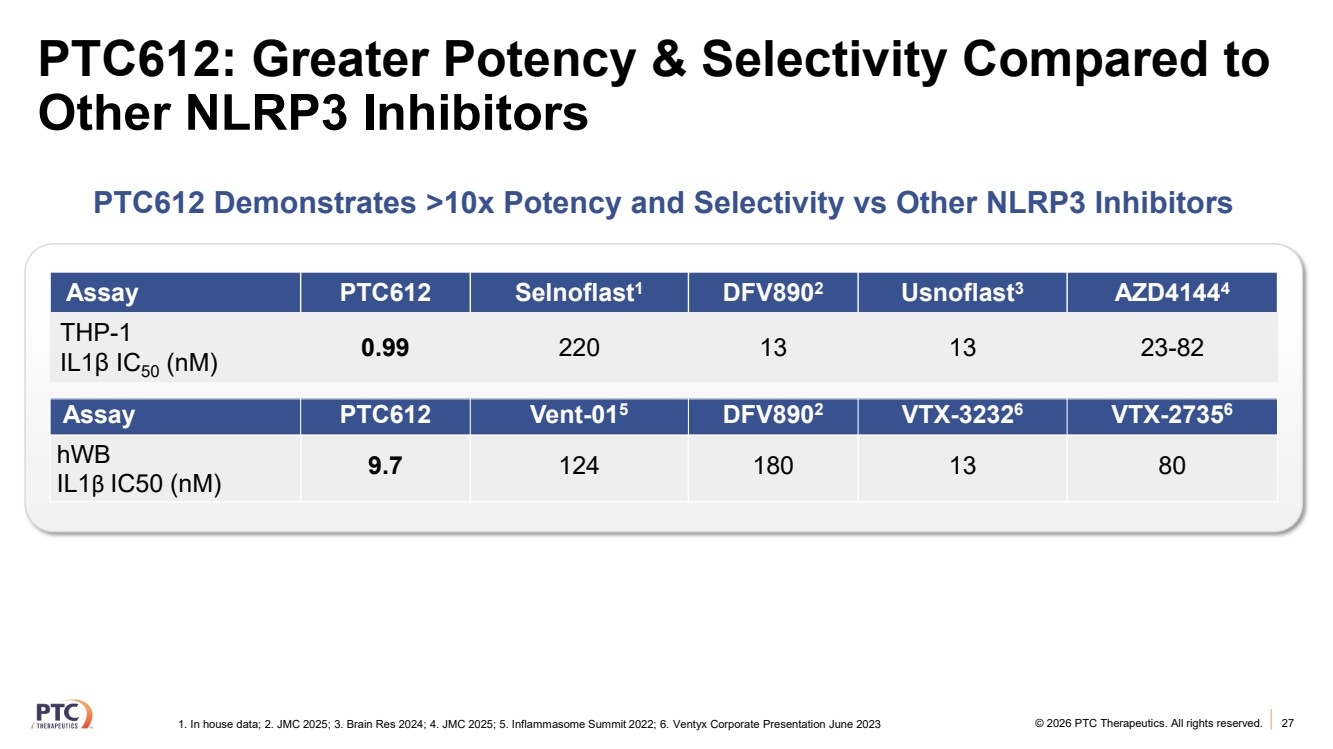
| © 2026 PTC Therapeutics. All rights reserved. PTC612: Greater Potency & Selectivity Compared to Other NLRP3 Inhibitors 27 Assay PTC612 Selnoflast1 DFV8902 Usnoflast3 AZD41444 THP-1 IL1β IC50 (nM) 0.99 220 13 13 23-82 Assay PTC612 Vent-015 DFV8902 VTX-32326 VTX-27356 hWB IL1β IC50 (nM) 9.7 124 180 13 80 PTC612 Demonstrates >10x Potency and Selectivity vs Other NLRP3 Inhibitors 1. In house data; 2. JMC 2025; 3. Brain Res 2024; 4. JMC 2025; 5. Inflammasome Summit 2022; 6. Ventyx Corporate Presentation June 2023 |
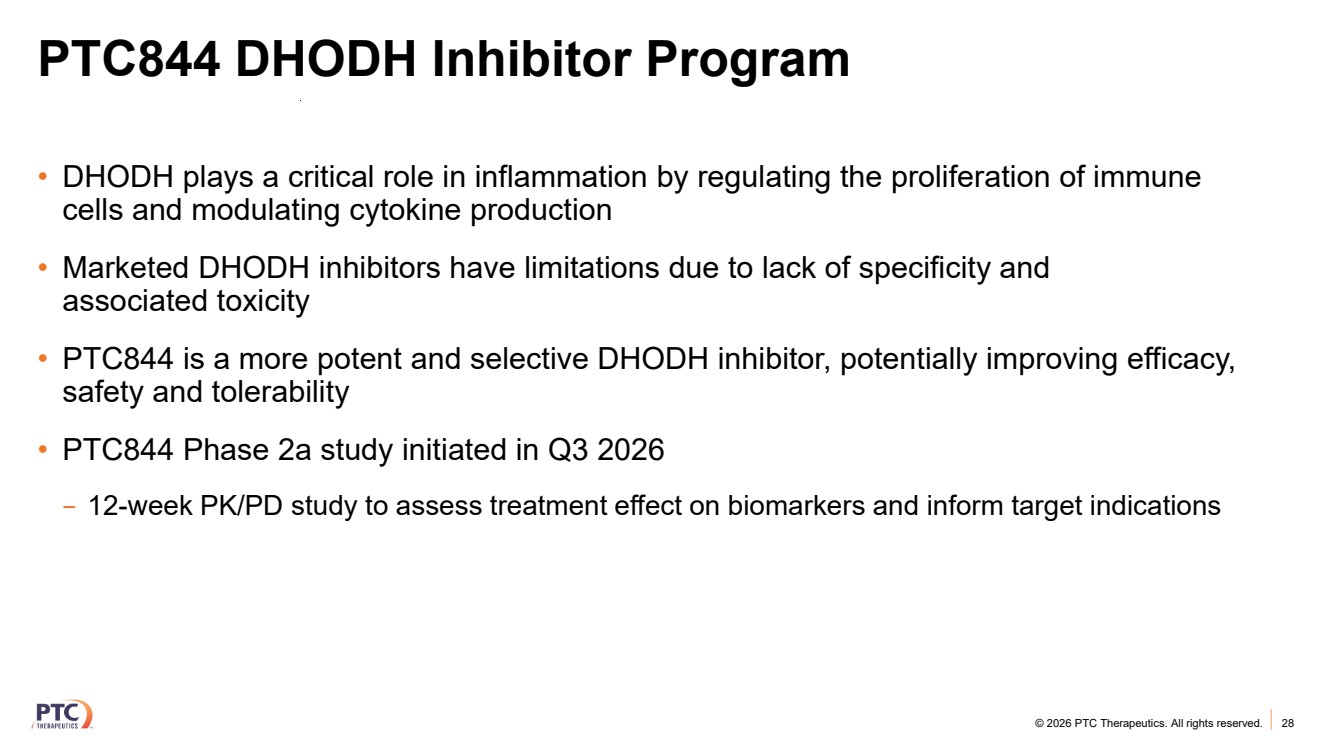
| © 2026 PTC Therapeutics. All rights reserved. • DHODH plays a critical role in inflammation by regulating the proliferation of immune cells and modulating cytokine production • Marketed DHODH inhibitors have limitations due to lack of specificity and associated toxicity • PTC844 is a more potent and selective DHODH inhibitor, potentially improving efficacy, safety and tolerability • PTC844 Phase 2a study initiated in Q3 2026 − 12-week PK/PD study to assess treatment effect on biomarkers and inform target indications PTC844 DHODH Inhibitor Program 28 |
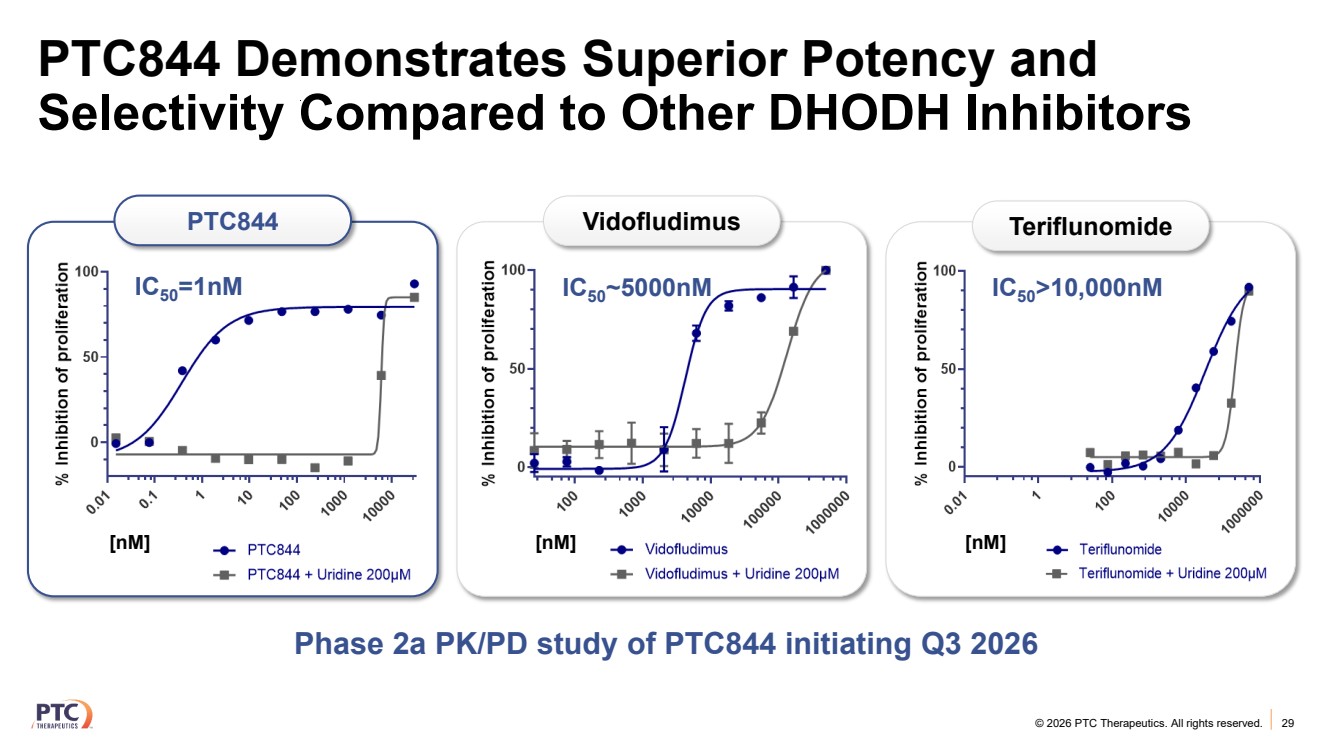
| © 2026 PTC Therapeutics. All rights reserved. PTC844 Demonstrates Superior Potency and Selectivity Compared to Other DHODH Inhibitors 29 Phase 2a PK/PD study of PTC844 initiating Q3 2026 [nM] IC50=1nM IC50~5000nM [nM] IC50>10,000nM [nM] PTC844 Vidofludimus Teriflunomide |
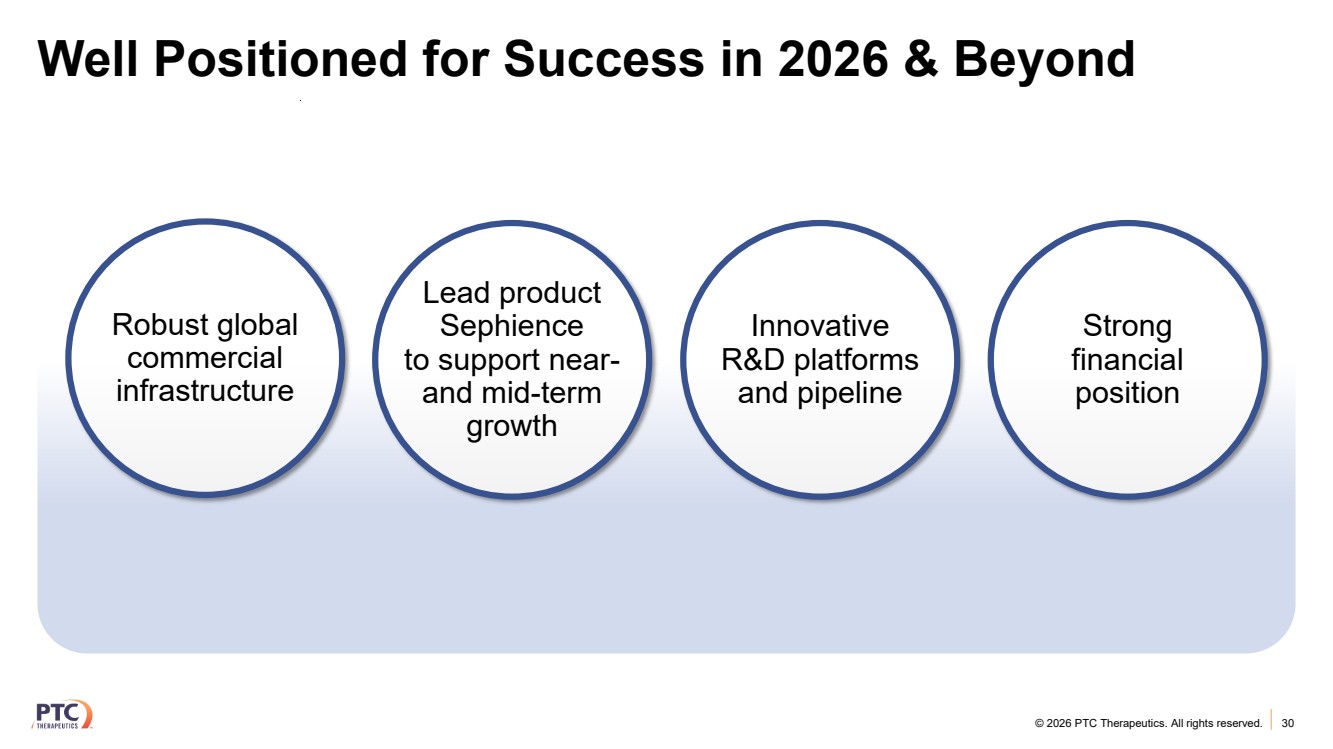
| © 2026 PTC Therapeutics. All rights reserved. Well Positioned for Success in 2026 & Beyond 30 Robust global commercial infrastructure Strong financial position Lead product Sephience to support near-and mid-term growth Innovative R&D platforms and pipeline |
| © 2026 PTC Therapeutics. All rights reserved. PTC Therapeutics October 2026 |